Integrate Gemini AI into Angular
Learn how to integrate Google Gemini AI into Angular apps using best practices. Boost UX with real-time AI features. Full guide with code examples.
Jul 21, 2025

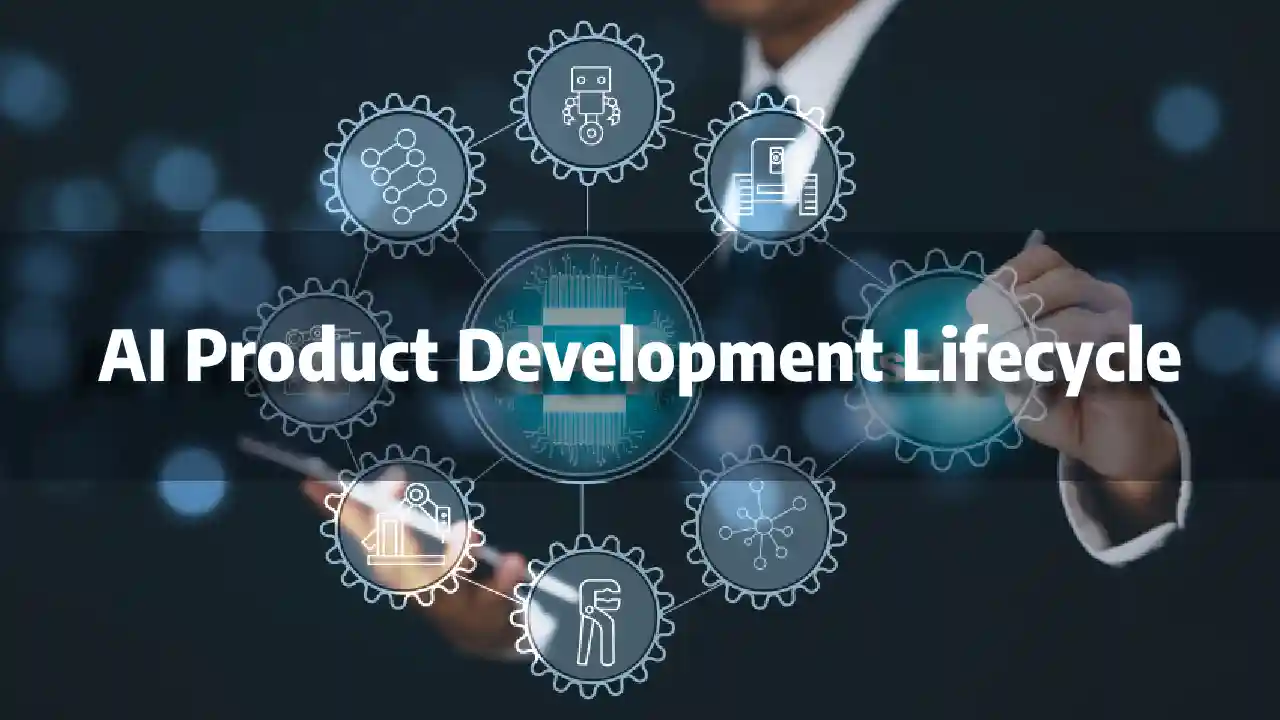
Artificial Intelligence is no longer a competitive advantage—it has become a fundamental requirement for businesses aiming to stay relevant in an increasingly digital-first economy. In 2026, AI is deeply embedded in how organizations operate, make decisions, and deliver value to customers.
From automating repetitive operational tasks to enabling predictive analytics and intelligent customer interactions, AI is redefining efficiency and innovation. Companies that adopt AI effectively are not just improving productivity—they are building scalable systems that grow smarter over time.
For startups, AI reduces the barrier to entry by enabling lean teams to achieve massive output. For enterprises, it acts as a catalyst for digital transformation across departments such as operations, marketing, finance, and customer service. Even non-technical founders can now leverage AI using modern tools and platforms without needing deep engineering expertise.
However, while AI adoption is accelerating, many organizations struggle with execution. The gap between wanting AI and successfully implementing AI lies in understanding the end-to-end development lifecycle.
This guide provides a comprehensive, practical, and strategic roadmap to help you navigate that journey—from idea to scalable AI product.
AI product development refers to the structured process of building intelligent systems that can analyze data, learn from patterns, and make decisions or predictions with minimal human intervention.
Unlike traditional software applications that rely on predefined logic, AI-powered systems evolve over time. They continuously refine their outputs based on new data, making them more accurate and valuable as they are used.
Traditional software operates within strict boundaries defined by rules written by developers. If a scenario falls outside those rules, the system fails.
AI systems, on the other hand:
Adapt to new scenarios without explicit programming
Handle uncertainty using probabilistic models
Improve automatically as more data becomes available
Retail: Personalized product recommendations that increase conversion rates
Healthcare: Predictive diagnostics improving patient outcomes
Finance: Fraud detection systems preventing millions in losses
Logistics: Route optimization reducing delivery times and costs
AI product development is not about adding a feature—it’s about building intelligent capabilities into your business model.
A successful AI product is not built in isolation. It requires a structured lifecycle that integrates business strategy, data engineering, model development, and continuous optimization.
The success of any AI initiative depends heavily on choosing the right problem to solve. Many organizations fail because they attempt to implement AI without clearly understanding the business value.
The most effective approach is to start with a problem-first mindset.
Focus on problems that:
Require repetitive decision-making
Involve large volumes of data
Have measurable outcomes (cost reduction, revenue increase)
Are currently inefficient or error-prone
Automating customer support using conversational AI
Predicting demand in supply chain systems
Detecting anomalies in financial transactions
Personalizing marketing campaigns
Before moving forward, evaluate:
Do you have enough data to train a model?
Is AI the best solution, or would automation suffice?
What is the expected ROI?
How will success be measured?
This stage is where strategic clarity is built—rushing through it often leads to wasted investment later.
Data is the foundation upon which AI systems are built. Without high-quality data, even the most advanced algorithms will fail to produce reliable results.
Inconsistent data formats
Missing or incomplete datasets
Bias in data affecting outcomes
Compliance with data privacy regulations
Organizations that invest in strong data pipelines and governance frameworks often achieve better AI performance with lower long-term costs.
At this stage, you define how your AI system will function.
Ideal for quick deployment
Lower development cost
Suitable for MVPs and prototypes
Designed for specific business needs
Higher accuracy potential
Requires more time, expertise, and budget
Time-to-market vs customization
Budget vs performance
Scalability requirements
This stage requires balancing business goals with technical feasibility.
Training is where the model learns patterns from data, while testing ensures reliability.
Input training data
Adjust model parameters
Optimize performance iteratively
Overfitting (model memorizes instead of generalizing)
Underfitting (model fails to capture complexity)
Robust testing ensures your AI system performs well under real-world conditions.
Deployment is where your AI solution becomes operational and delivers value.
APIs for communication between systems
Frontend interfaces for user interaction
Backend infrastructure for scalability
A well-executed deployment ensures reliability, speed, and seamless user experience
AI systems require continuous monitoring to maintain performance.
Data evolves over time
User behavior changes
Model performance degrades (model drift)
Tracking performance metrics
Retraining models with new data
Optimizing for cost and speed
AI is not a one-time project—it is an ongoing process of improvement.
The AI ecosystem in 2026 offers a wide range of tools that simplify development and scaling.
Model development frameworks
Cloud platforms
Data engineering tools
MLOps platforms
| Tool Type | Advantage | Best For |
| Pre-trained AI | Speed | MVPs |
| Custom AI | Flexibility | Complex use cases |
| Cloud Platforms | Scalability | Growing systems |
| Open-source | Control | Advanced teams |
Choosing the right stack directly impacts cost, speed, and scalability.
AI development requires careful financial planning.
Data preparation
Model development
Infrastructure
Talent
MVP: $15,000 – $50,000
Mid-Level: $50,000 – $200,000
Enterprise: $200,000 – $400,000+
API usage
Maintenance
Scaling infrastructure
Compliance
Understanding these costs ensures better ROI and long-term sustainability.
Generative AI transforming operations
AI agents automating workflows
Multimodal AI systems
Real-time AI at the edge
Ethical AI and governance
Early adoption of these trends can create a significant competitive advantage.
Detailed scenarios showcasing how startups, enterprises, and non-technical founders successfully implemented AI to achieve measurable results.
Scaling involves:
Infrastructure optimization
Cost efficiency
Performance tuning
Continuous feedback loops
Challenges such as data limitations, high costs, and lack of expertise can be addressed through strategic planning and expert collaboration
A clear roadmap helps reduce risk and accelerate success:
Building AI solutions requires not just tools, but the right expertise, strategy, and execution.
Prishusoft helps businesses at every stage of their AI journey—from idea validation to full-scale deployment and optimization.
Whether you're a startup exploring AI for the first time or an enterprise looking to scale existing systems, Prishusoft provides the expertise needed to succeed.
If you're planning to build an AI product or automate your business processes, the best first step is to consult with experts.
Contact Prishusoft today to discuss your requirements
Get a custom AI development strategy tailored to your business
Turn your idea into a scalable, high-impact solution
AI is no longer optional—it is a strategic necessity. Organizations that invest in structured AI development and scalable systems will lead their industries in the coming years.
The key is not just adopting AI—but implementing it correctly.

Learn how to integrate Google Gemini AI into Angular apps using best practices. Boost UX with real-time AI features. Full guide with code examples.
Discover how AI is revolutionizing web development. Explore 12 AI-driven trends, from vibe coding and autonomous agents to personalization, chatbots, voice search, and AI-powered security, plus how Prishusoft helps businesses harness AI for smarter websites.

Discover how AI improves modern web and mobile applications with automation, personalization, speed, and smarter user experiences. Learn the key benefits.
Get in touch with Prishusoft – your trusted partner for custom software development. Whether you need a powerful web application or a sleek mobile app, our expert team is here to turn your ideas into reality.
